The serum section of Amazon search results is a war zone. Every brand is yelling a percentage at you — 15%, 20%, “triple action” — and half of them have that suspicious yellowed liquid that tells you the formula already lost the fight before you even opened the box.
That’s the thing that actually trips people up: vitamin C serum for face isn’t one category. It’s a dozen different formulas using different forms of vitamin C, and those forms behave very differently on skin. L-ascorbic acid is the version with the most research, but it oxidizes fast, needs a low pH to work, and that low pH is exactly why it stings. The alternatives — THD ascorbate, ascorbyl glucoside — get written off as “weaker.” That’s not quite right.
Eight Saints uses THD ascorbate (tetrahexyldecyl ascorbate), which is oil-soluble, pH-stable, and doesn’t degrade the way L-ascorbic acid does. The bottle stays clear. Three weeks in, it still looks the same. And because it works at a gentler pH, it skips the sting on application that makes sensitive skin people swear off vitamin C serums entirely.
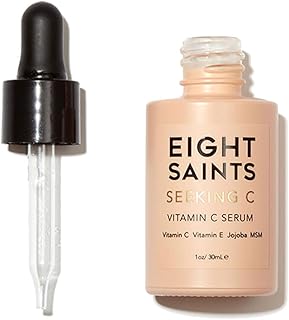
What it actually does well: the brightening is real, but it’s a slow real. Dark spots start to fade around week three to four with consistent use — not dramatic, but measurable. The texture is thin and absorbs fast. No stickiness, no pilling under moisturizer, no sliding under SPF. The hyaluronic acid and jojoba oil in the formula keep it from feeling stripping while it’s working, which is a thoughtful call for an active serum.
The 4.7 rating across 2,500 reviews is genuinely one of the cleaner signals here. That sample size matters. And the pattern in the reviews is consistent — “finally a vitamin C that doesn’t irritate” keeps coming up. That’s the THD ascorbate doing its job.
If that stability and tolerability is what you’re looking for, here’s the link on Amazon.
The part worth knowing before you buy
THD ascorbate has less clinical data behind it than L-ascorbic acid. If you want the heavyweight with decades of peer-reviewed studies, Eight Saints isn’t that. It’s a trade-off — stability and tolerability in exchange for being a newer form with less research. Is that trade-off worth it? For sensitive skin, probably yes. For someone who’s never had a problem with traditional vitamin C formulas, maybe not.
The other catch: 1oz is small. You’re paying for formula quality, not volume. Two to three drops covers the full face — it goes further than you’d expect — but you’ll notice the bottle. At this price point, that’s a fair gripe.
So who’s this actually for?
Honestly? If you’ve tried a vitamin C serum, had a bad experience — stinging, flaking, or the bottle went orange before you finished it — this is the version worth trying. The formula is designed around exactly those problems. If you’ve never had issues with L-ascorbic acid and want the most clinically documented option, look at something formulated around that instead.
The other thing: vitamin C is a long game. Four weeks minimum before you see anything meaningful. Morning routine, after cleansing, under SPF — this fits in without drama. For a daily facial serum, that consistency is the whole point.
Short version
Stable formula that won’t turn orange on you. Gentler than most vitamin C serums. Real brightening with consistent use. Bottle’s smaller than you’d like. Worth it if traditional vitamin C serums have given you trouble before.
Disclosure: This post contains Amazon affiliate links. If you purchase through my links, I may earn a small commission at no extra cost to you. I only recommend products I genuinely believe in.